Using less electricity
Every month, electricity bills arrive, and the statistics on the bills are unappealing. Good news! These expenses can be minimized. We have compiled easy-to-use yet efficient strategies for electricity conservation in our stuff.
Finding wasteful uses for power
Knowing what uses the most electricity is crucial to comprehending how to conserve it. The apartment’s major electrical users are:
Electric stove, electric oven, refrigerator, and freezer: 25–30%; illumination, light bulbs, 20–%; washing machine, 15–10%; other devices, 15–%. After identifying the consumers of electricity, it is now vital to comprehend how they work and any opportunities for cost- and energy-saving measures.
For instance, a modern refrigerator may not have a lot of power, but it constantly uses electricity because it is always on and the compressor is frequently activated to pump refrigerant.
An electric stove, hob, or oven has a high peak power but is only sporadically utilized; it uses a lot of electricity.
A washing machine employs a comparable model
Although it is challenging to discuss universal usage guidelines for the TV, computer, and air conditioner, we will still provide some helpful advice for them below.
Conserve lights.
1. Light bulbs that conserve energy. Initially, some math. For instance, the apartment utilizes 3 100 Wh lamps in the hallway, kitchen, and bedroom, and 3 60 Wh lamps in the hallway, bathroom, and toilet.
If three 60 W lamps operate for a single hour each day, then 3 x 60 W equals 180 Wh, or 0.18 kWh. Additionally, three 100 W lights operate for 1.5 hours in the morning and 4.5 hours in the evening, producing 1800 Wh, or 1.8 kWh, after six hours.
Therefore, 6 bulbs use 1.8 kW + 0.18 kW 2 kW per day, and the meter will reach 2 kW x 30 days = 60 kW at the end of the month. These are only light bulbs, after all!
It takes five minutes to swap out an incandescent bulb for an energy-efficient one. They each use 0.022 kW at the same time, resulting in a monthly reduction of electricity use from 60 to 19 kW. LED and fluorescent lighting are the most widely used energy-saving lamps.
Yes, they cost more than standard incandescent lamps, but they also last a lot longer and use 5 to 10 times less energy. You can also choose models with various light tones.
Regulation 2. Even with standard bulbs, energy savings are possible with a multi-key switch and dimmer. The first will assist in implementing the chandelier’s section-by-section lighting, and the second will offer seamless light adjustment, both of which will help save electricity.
2. Various lighting options. Utilize various lighting techniques properly. For instance, if the room has light wallpaper, transparent tulle, and light curtains in warm tones, the light from the window will be maximized.
Only the general illumination of the space requires a chandelier, which must also have several key switches and energy-saving lights. Local light, such as a table lamp, wall sconce, or floor lamp next to your preferred chair, will also serve to illuminate the desired corner at a specific time. They use lamps with less power, thus there will be less electricity use as a result.
Additionally, wipe the lamps and shades more frequently because, surprisingly enough, the dust on them can reduce the brightness by 10-15%.
We detailed how to choose a floor lamp, table lamp, chandelier, or wall sconce in our unique resources, as well as what factors to consider when selecting a model.
With the washing machine, dishwasher, and refrigerator, we continue to save money.
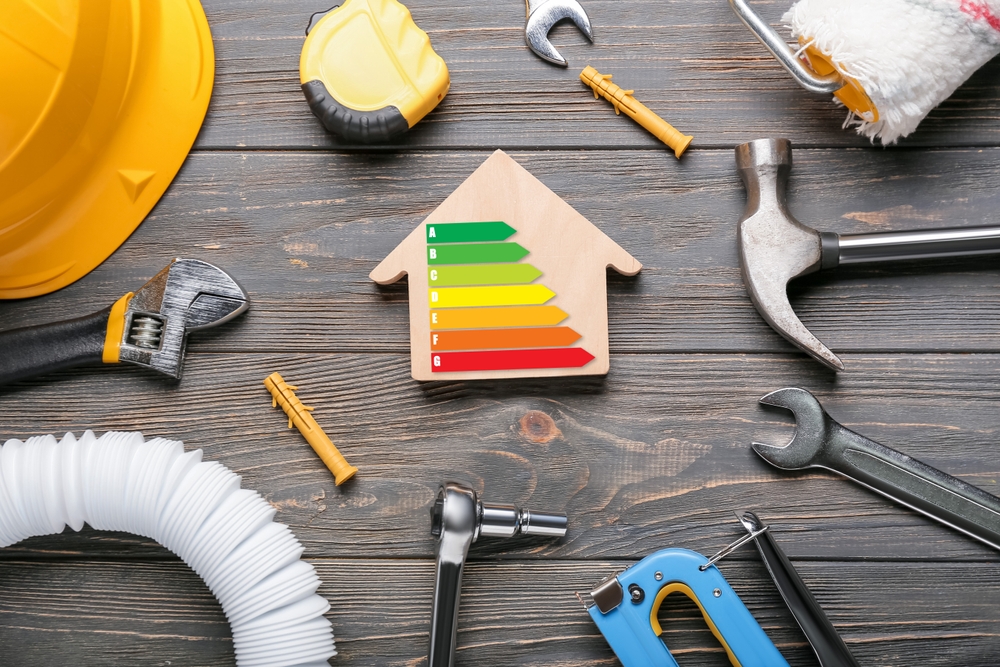
The easiest and most dependable piece of advice is to choose affordable models of large household appliances, preferably those in the class A+/A++ or higher.
3. You can also save money by running the refrigerator more efficiently. To do this, pick a model that is the appropriate size, avoid placing it next to the stove, and attempt to open and close the door less frequently.
As a result, the compressor will work less and less electricity will be used to maintain the refrigerator’s internal temperature.
Tips on how to save electricity in the kitchen
For cooking a lot of food, using an electric stove, cooking surface, and oven is more cost-effective. It is preferable to utilize a different method for cooking food or boiling water for little items.
When cooking, only use the electric stove’s maximum power to bring the water to a boil.
Food can be heated in a microwave since it is quicker and less expensive to use than a stove.
Remember to remove the scale off of the electric kettle since it prevents the water from receiving heat from the heater. Boil only as much water as you need in order to avoid wasting extra electricity. The most cost-effective format is a gas-heated kettle. Use a steamer or multicooker, cover the pan with a lid, or cook with residual heat.
Save money by using inefficient equipment like an air conditioner, a vacuum, and a TV. Is it possible to make savings with expensive equipment? There are indeed secrets here as well!
When choosing an air conditioner, consider the size and volume of the space. When operating the air conditioner, close the windows and doors to prevent cooling the street.
Cleaning the garbage bag more frequently when using a vacuum cleaner will help the engine “breathe” more freely, improve traction, and shorten cleaning time. Select vacuum cleaners with an aqua filter and bagless types to make the job easier.
Do not leave the TV, computer, laptop, or music center in standby mode; instead, press the power button to turn it off fully. They frequently use several watts per hour in stand-by mode; in a day, the bill will reach tens of watts, and in a month, 6-7 kW will run.
Swap out standard outlets for “smart” ones
Smart sockets can accomplish far more than conventional sockets do by default. They not only allow for remote on/off switching, which eliminates the need to check to see if the iron is off, but they also contribute to energy conservation.
After a brief setup, smart plugs are linked to the existing wiring and practically instantly functional. For instance, Wi-Fi-enabled outlets receive their own IP address, connect to a router, and may be managed remotely via a smartphone app.
Therefore, you can use the “travel” mode to turn on the light while you are gone to simulate the presence of the owners at home, or you can turn off the TV or laptop from the network on the way to work to save a few kilowatts. If the mains voltage changes or drops, or if a short circuit happens, an overcurrent-protected socket will instantly shut off the appliance.
When plugged into a socket with a timer or thermostat, the appliance will switch on and off at predetermined intervals to prevent fires. For operating the boiler, air conditioner, heating, underfloor heating, etc., such sockets would be useful.
Outlets equipped with electricity meters will display the number of kilowatts used by each plugged-in appliance. Additionally, you won’t have to guess if the refrigerator or the boiler is the “most expensive” appliance in the house. The “smart” socket can be configured to control the devices that are included in it with the help of the scenario support function. For instance, set the boiler to come on for heating 2-3 hours before you arrive and to switch off while no one is home. You won’t pay too much for heating if the equipment is out of commission for several hours.