How to pick an energy-efficient bulb
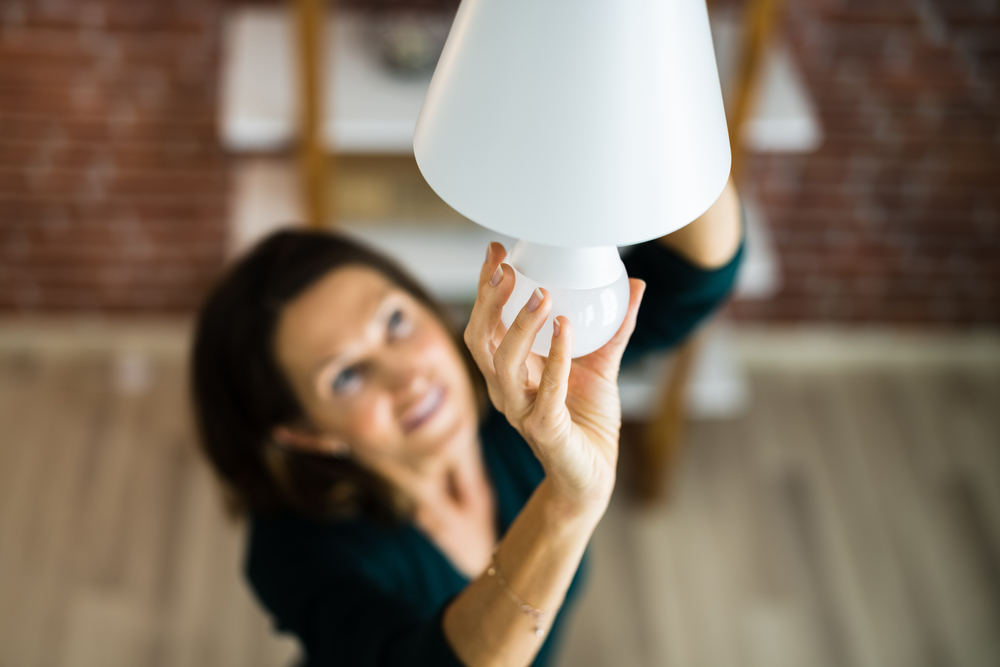
In comparison to standard models with a tungsten filament, energy-saving lamps consume less electricity and have a longer lifespan. In our content, we discuss what they are and how to pick one that will last for a long time.
Pick energy-saving lamps based on their features and kind.
Energy-saving lamps use less electricity, shine more brightly, and are built to last longer than standard tungsten-fibre lamps. They do, of course, cost more, but the extra money is well worth it.
In areas that require artificial lighting every day for at least three hours straight, energy-saving lamps will be helpful. In other words, you cannot live without modern, affordable lamps if the lights are on in practically every room for several hours in the evening.
Of course, it is smarter to use regular incandescent lamps in the warehouse and the attic where the lights are only seldom and briefly turned on. Fluorescent and light-emitting diode (LED) bulbs both save energy.
Pick fluorescent lights
There are two major categories for fluorescent lamps:
- fluorescent tube versions, which are most frequently used in office lighting; “housekeeper”-style compact fluorescent lamps.
- A fluorescent bulb uses 5 times less energy than a standard lamp and has an estimated lifespan of 10,000–15,000 hours, or 4–7 years.
The electrodes of the fluorescent lamp bulb are constructed of tungsten and have an emitting coating on them. The product is internally filled with an inert gas that contains a trace amount of mercury vapor.
UV radiation is excited by an electric arc discharge that forms when voltage is supplied between the electrodes. The phosphor that covers the lamp bulb is affected by UV light from the inside, and it begins to glow. A normal 100-watt bulb’s luminous flux is equivalent to the luminous flux of a 20-watt compact fluorescent lamp.
Do you wish to brighten the space more without using more electricity? Invest in more energy-efficient lighting. Simply divide the luminous flux by the power usage to find its value. The packaging must display both of these values.
Compact fluorescent lights’ drawbacks
- Handle them carefully and dispose of them in designated areas due to the mercury concentration;
- Voltage drops in the network, frequent turning on and off, and high humidity, for instance in toilets, all reduce service life;
- By the end of the service life, brightness has decreased by around 25%.
Compact fluorescent bulbs have become less important as LED technologies have advanced, and practically all manufacturers have stopped making these types.
Selecting LED lighting
LED bulbs were only recently introduced to the market but soon became well-liked. When an electric current flows through a semiconductor, an LED produces light. Mercury and other toxic or harmful elements are not present in LED bulbs.
LED lighting is more affordable than any other type. Compared to fluorescent bulbs and traditional incandescent lights, they use 8–10 times less energy each. Their useful life is between 30,000 and 50,000 hours or more. This is more than 20 years assuming they labor an average of 3.5 hours per day.
The more LED lighting is used in space and the longer they last, the more energy they conserve. Unlike fluorescent bulbs, LED lights may be turned on instantly and shine brightly. They are also absolutely safe and do not need special disposal after their service life is up.
Negative aspects of LED lighting
- expensive price; considerable service life loss at hot temperatures;
- not perfect color reproduction – items may appear slightly different than when lit by incandescent or natural light;
- the necessity of heat removal and the restricted ability to work with hermetic bulbs;
- Only specialized lamps that are compatible with specialized dimmers, which are significantly more expensive, have the ability to change the light flux.
Selecting halogen lighting
Halogen lamps can be considered energy-saving in a specific sense because they are twice as economical and last twice as long as traditional incandescent bulbs. Halogens can be capsule, reflex, or linear. These lamps are small, mercury-free, and offer brilliant, “sparkling” light with excellent light transmission.
They will be helpful for organizing general and local lighting as well as for putting creative design ideas into practice. Halogen lamps can be utilized with a dimmer if the level of lighting needs to be changed.
Power. This indication ranges from 1 to 125 W in several variants. The light bulb is more frugal and will operate more affordably with a lower power usage. On the other hand, a light bulb’s luminous flux increases with power consumption, making it shine brighter.
Use the following equation to make your decision easier: divide the incandescent lamp’s necessary power by 5 for fluorescent bulbs and by 10 for LED lamps.
There is a filter called “Incandescent lamp power analogue (for energy-saving lamps), W” in the Hotline catalog. This measure compares an energy-efficient lamp’s power output to that of an incandescent lamp of the same brightness.
The power equivalent is typically 5 times for fluorescent bulbs and 7–10 times for LED lamps. In other words, a 20 watt energy-efficient fluorescent lamp will have the same brightness as a 100 watt conventional incandescent lamp.
Flow of light. Along with power, this parameter is taken into consideration first. It directly impacts the degree of illumination and is expressed in lumens (Lm). More light is produced by the bulb the higher the lamp’s power and luminous flux value.
Color temperature selection
In Kelvin, color temperature is measured (K). The lamp’s light will appear colder the higher the color temperature is. Models with color temperatures between 2700 and 3400K are best for the kitchen and bedroom since they produce a pleasant, aesthetically pleasing light that is similar to that produced by a regular lamp. A warm-yellow lamp can be placed in the nightstand.
You can install a 3500-4500K neutral white, nearly natural, or daylight white light model in the living room. In offices, retail establishments, and salons, cold white light bulbs with a blue admixture (6000–6500K) will be required.
Select the voltage, base, and angle
LED bulbs also have a variable angle of light scattering. A slight tilt suggests that the lightbulb will glow in a single direction. This approach works best for accent lighting on artwork and other tiny decorative items.
For closed lamps, a temperature range of 150–200° is ideal; if the lamp inside the lamp is open, aim for indicators that are at least 250°. The most acceptable lighting for the space is provided by this lamp. Base class. The typical E27 socket has a diameter of 27 mm and is found in the majority of energy-efficient bulbs. They work with the majority of contemporary lamps and chandeliers.
You will require light sources with an E14 base for wall sconces and floor lamps with a smaller diameter cartridge. Pay attention to the E40 label when selecting bulbs for general lighting fixtures. There are lights with a base in the shape of a pin (G), a base with recessed contacts (R), and various forms in addition to Edison’s threaded base, or “E.”
High-voltage. Some lamps require 220-240V, while others only need 12V. The second type, which produces the least amount of heat, is required for lighting fixtures that are incorporated into shelves, cabinets, or other pieces of furniture since mains voltage can be harmful to humans.
Select the bulb’s shape and color
Traditional pear and U-shaped/lotus, bazooka and capsule, spiral and mushroom, candle and ball/sphere, linear/tube and point/headlight are some of the different shapes of energy-saving lamps.
The dispersion angle and lighting style are both influenced by the lamp’s size and form. Therefore, the type of lamp you choose will rely on the lighting tasks, the elements of the interior design, and your own aesthetic tastes.
Due to the complexity of their manufacturing technology, filament LED lamps and spiral compact fluorescent lights cost a little more. The hue of the bulb impacts the output light’s shade and visual perceptions but not the lighting’s overall quality.
Matte lamps emit light over a wide area, are soft and consistent, and do not sting the eyes. These designs are appropriate for kids’ rooms, bedrooms, and open lighting. For crystal chandeliers with numerous pendants and lamps with closed shades, transparent types are appropriate.
Table, track, and wall lamps should have a white bulb, whereas nightlights and wall sconces in bedrooms should have a gold bulb. Models with different-colored bulbs, such as those that are green, red, yellow, etc., will be helpful for achieving the required lighting design for the space.
Consider the packing carefully when selecting a model, regardless of its shape or color, and be sure to maintain both the package and the receipt until the warranty has run out.
Features of energy-efficient lighting
There are numerous models among the enormous selection of “housekeepers.” What distinguishes them from one another?
Energy-efficient reflector light bulbs include an internal mirror coating that increases light output and provides a directional flow of light. When used to light trade and exhibition halls, attractive suspended ceilings, they are the perfect option.
In the event of an emergency power outage, rechargeable lights will be useful as a portable flashlight because they are irreplaceable. Their capacity for independent operation is up to six hours.
Each sound bulb contains a premium JBL speaker that plays music, radio programs, or audiobooks by transmitting sound signals through a wireless Bluetooth channel. Install the light with a screwdriver and get the free branded app for your tablet or smartphone.
LED disco lights will simply improve the mood and contribute to the room’s unique festive ambiance. They may rotate around their axis with the help of a little motor, lighting the space with vibrant lights or graphics. Such a gizmo will be welcomed by partygoers. Consider models with RGB lighting if you don’t like rotation but prefer to vary the color of the illumination.
The field of LED lighting is moving in a new direction with filament bulbs. They seem like regular incandescent lamps from the outside, but they are ten times more cost-effective. The luminous flux created by the transparent bulb is even greater than that produced by a standard LED lamp, whose translucent bulb “mutes” the light. LEDs give the impression of a tungsten filament.